The most common issue among the 2002-2006 Maserati Spyder/ Gransport Spyder is loose convertible straps. Euro2ner offers an assist strap that rectifies the issue with an easy installation.
The root of the issue is the bars not being pulled properly during open/close operation resulting in two bars being caught on each other. This also causes a rub hole on both sides of the top as well.
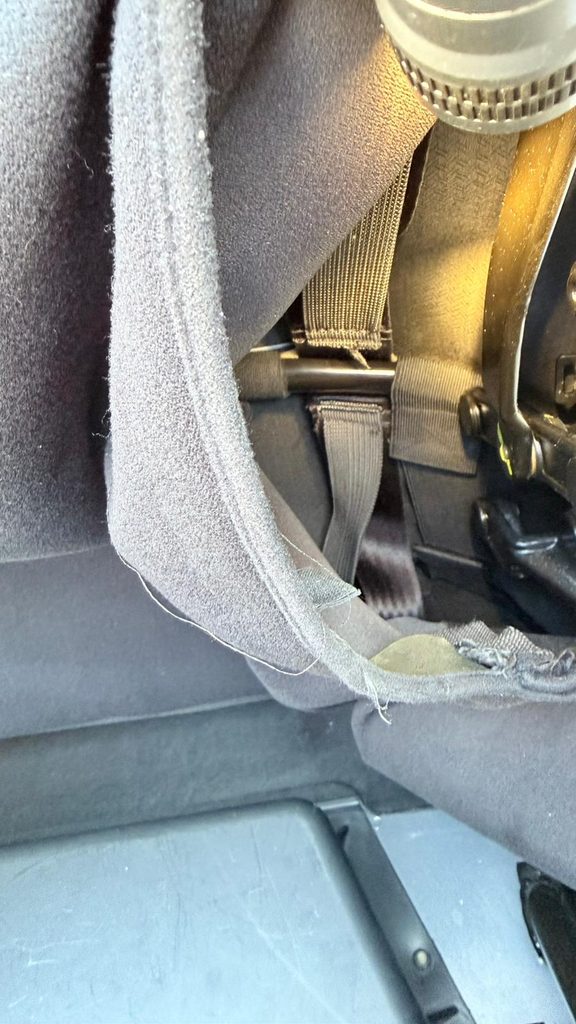
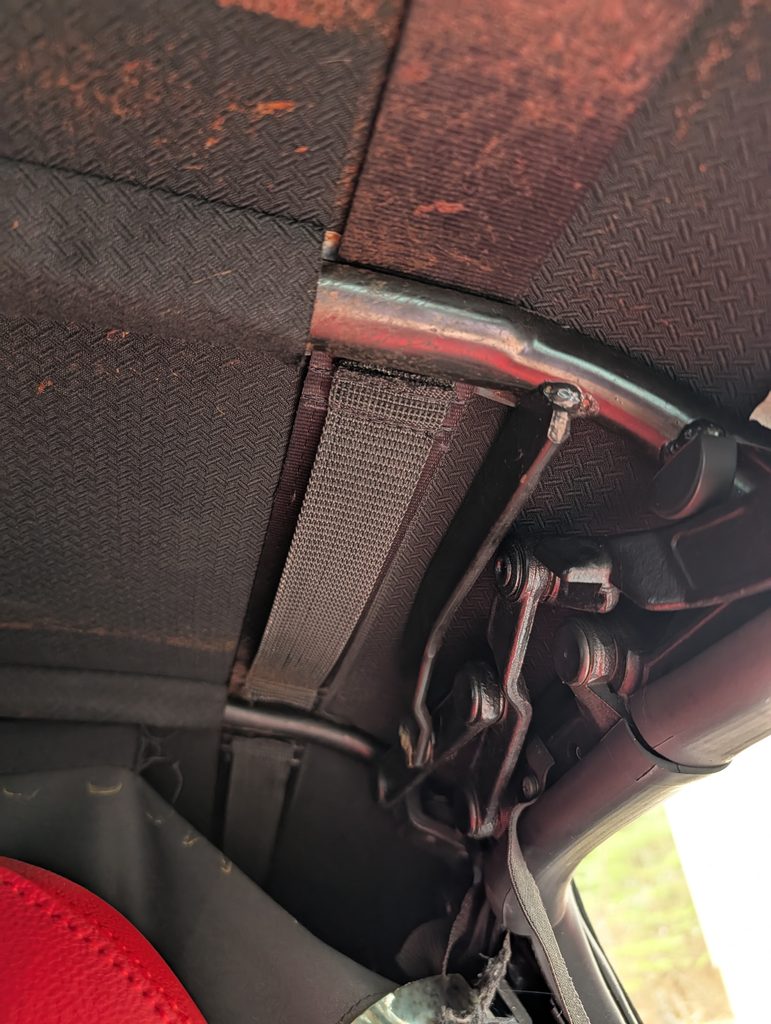
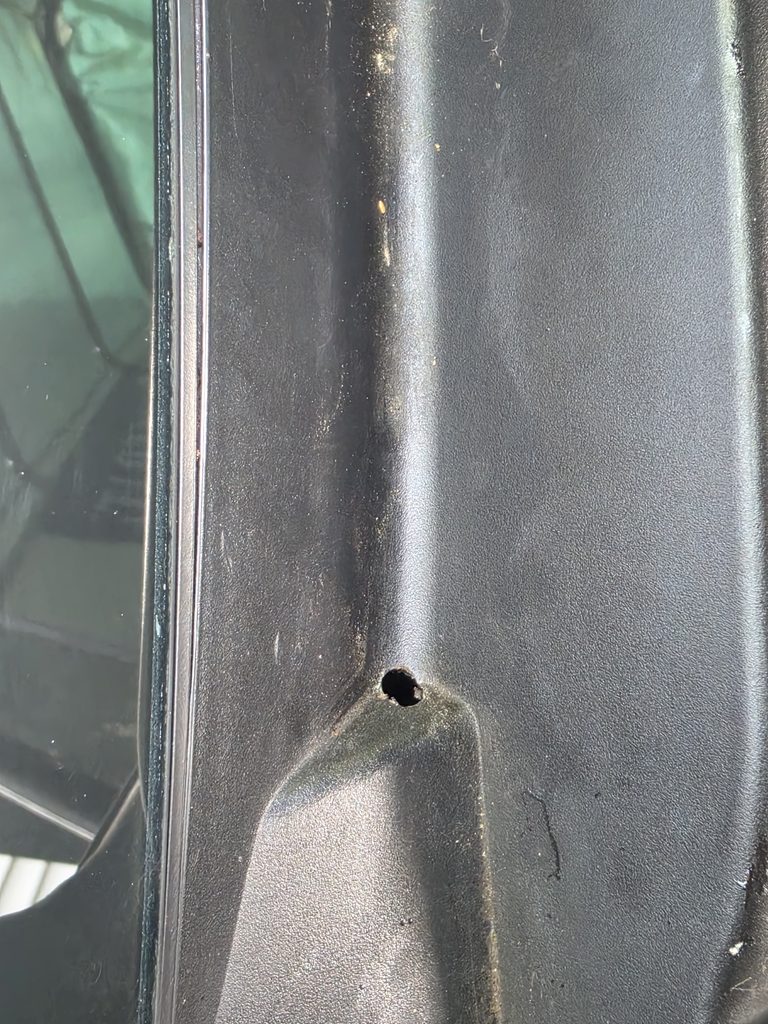
To install the assist straps, either manually open the top partially or use the electric function to get to the stuck point and turn off the car. You’ll be reaching into the small opening on each side of the headliner to access the bars/straps. Below is a photo of the opening with the original straps left and our assist straps installed to the right of them. Simply loop them around each bar. It will be installed only on the two bars before the rear glass panel.
Here is a clearer view with the headliner fully removed This should show you the only two bars you are accessing.
(This guide is applicable to the Ghibli and Quattroporte as well but the Levante is the most common sighting of this issue)
There are multiple water drains on the 2017-2024 Levante, there have been revisions to them almost every model year with the 2020+ models being the most resilient to these issues. Keeping the drains clean and clear will prevent water ingress into the BCM gateway module (located on LH front floor (USA Driver’s Side). The Levante has a false floor setup, so there’s actually about 3″ of space between the carpet and the floor itself where water would accumulate, so wet carpet is only a symptom when you’re well past the point of damage.
Here’s the drain locations including the best method for cleaning them:
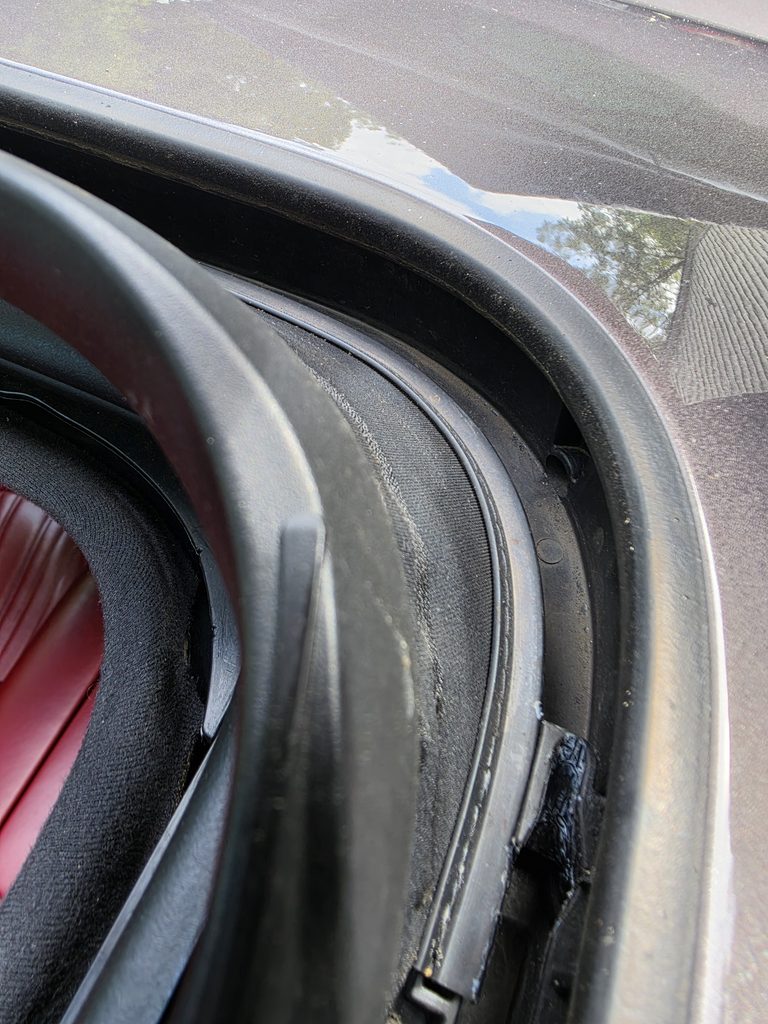
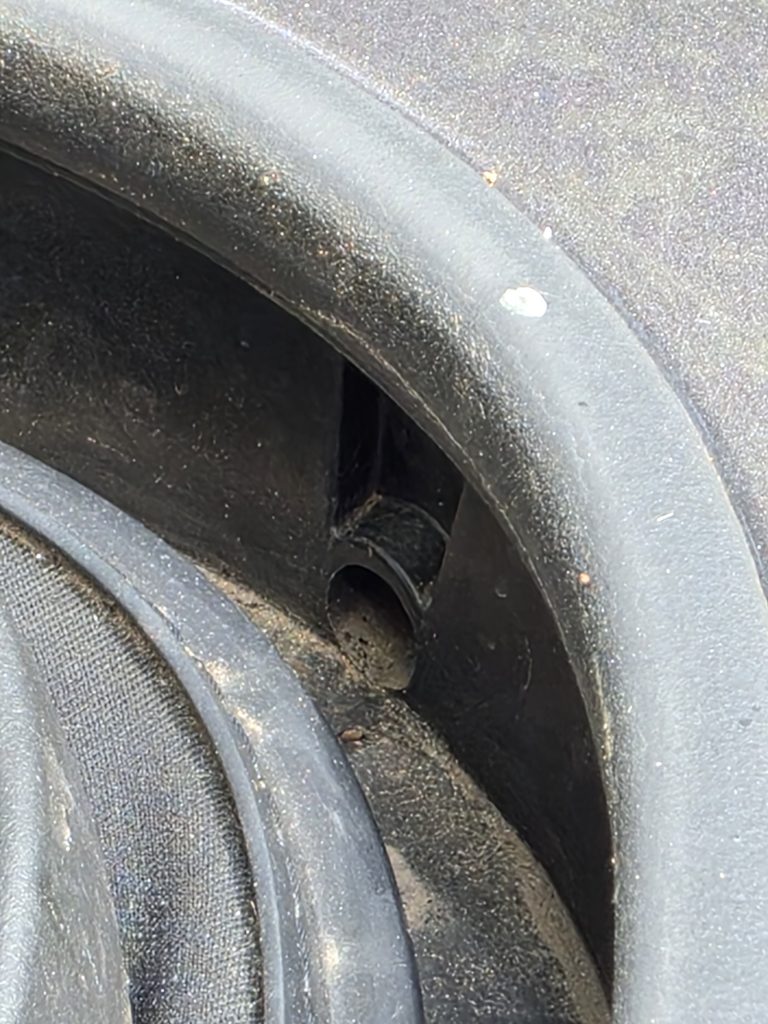
Sunroof drains (There are 4 drains on the sunroof in each corner). If the fronts of these are clogged, water will usually drip from the headliner by the vanity mirrors. If the rears are clogged, it will drip from the rear of the sunroof headliner. These are best cleaned with a can of compressed air (avoid shop/compressor air as excess pressure can cause the internal tube to dislodge)
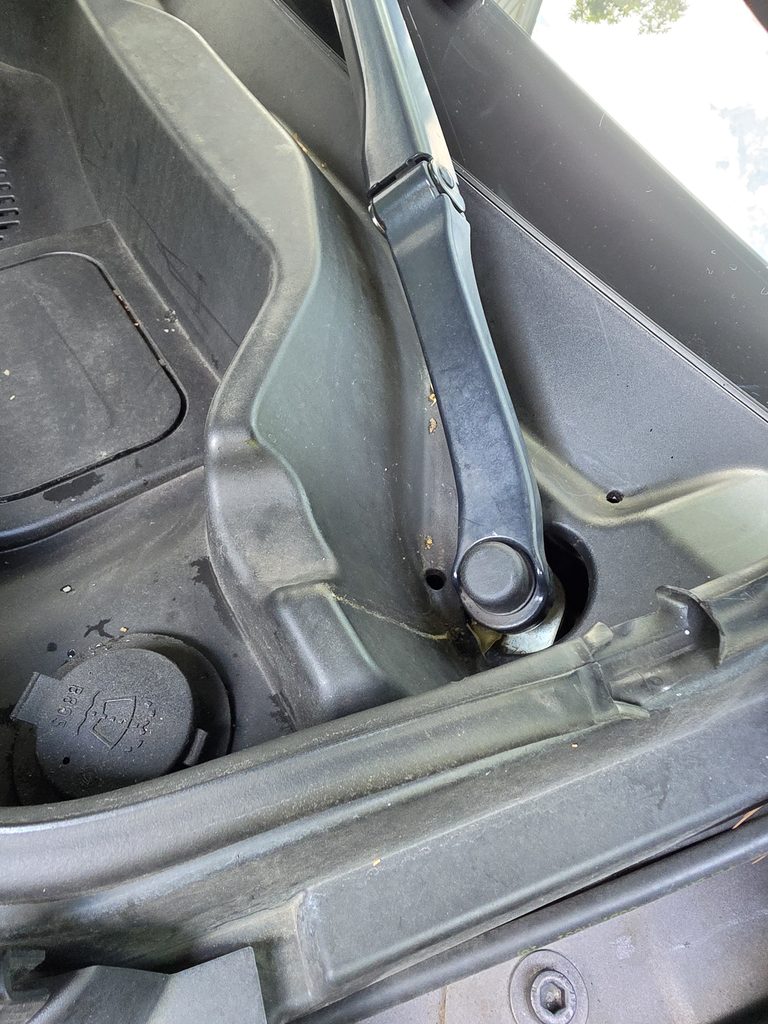
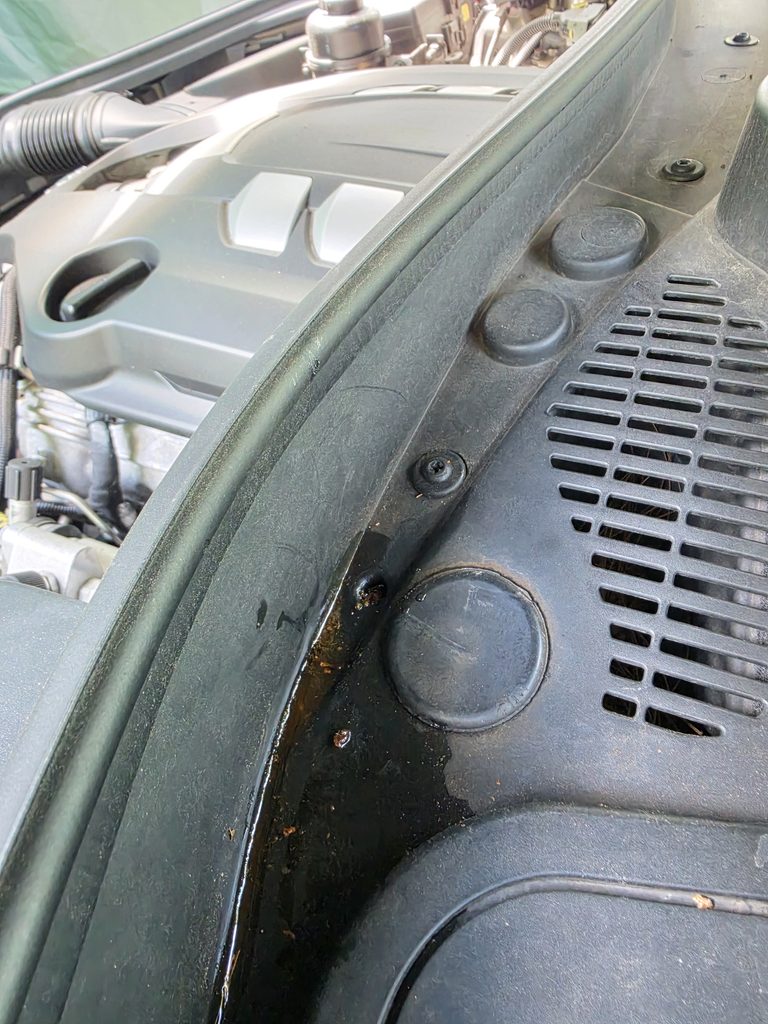
Front Windshield Cowl drains – Arguably the most critical drains. If clogged, water will enter past the firewall into the front floors where the BCM and multiple other connectors are housed. These are best cleaned with some weed whacker string since it’s a gentle plastic but rigid enough to snake each drain. There are 4 drains, they are all accessible with the hood opened.
Fuel cap drain – there is a single drain behind the fuel door cover, less critical but if clogged or missing, water can get trapped and cause rust on parts of the rear chassis. We often see the tube damaged/missing, if that’s the case, water will still migrate fine so long as the hole isn’t clogged.
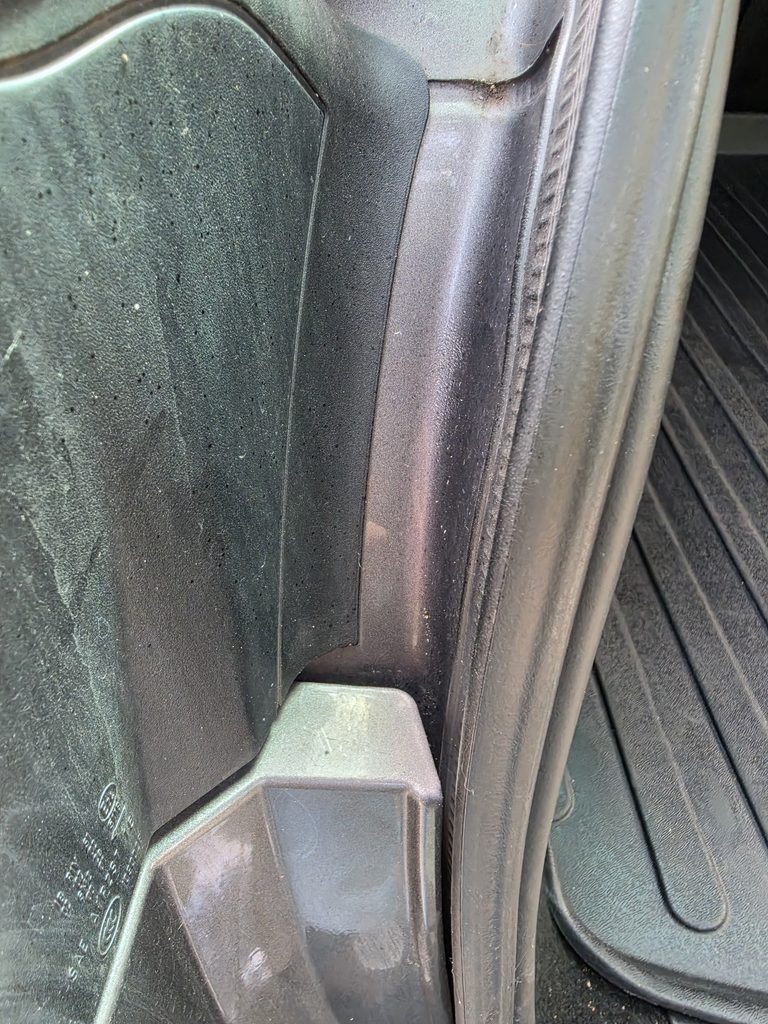
Rear Liftgate Drains – There are two drain cutouts behind the rear hatch on the Levante, usually only large leaves or debris can clog this, If any debris, just run some water through to clear it.
Flathead Screwdriver or similar for unclipping air box clips
Pick or similar to disconnect MAF connectors and undoing air hose clamps
5MM Hex/Allen key
Begin by unclipping the air box metal clips, there’s a total of 3.
For the Passenger side there will be a harness clipped to the lower half of the air box, use your pick or flathead to unclip it.
For the driver’s side there should only be a single coolant hose clipped to the top lid, use the flathead to unclip it.
Remove the air filter caps and air filters themselves.
The MAFs are bolted to the bottom of each air box and coupled to the lower air pipes by a coupler with two clips
at this point, you only need to unclip the lower clamp to remove the lower section of the air box along with the MAF. Once that’s unclipped you can start to pull up and then disconnect the MAF connector once you start removing the airbox from the vehicle
remove the other clamp on the coupler and then remove the two 5mm hex bolts (m6x18 if replacement is needed) from each side. Take note of which side the connector is facing on each air box and when installing make sure it matches up. Make sure the airflow direction is pointed down from the housing(towards bottom of vehicle)
with the MAF removed, make sure the sealing o-ring is free of damage or tears, otherwise replace. Apply a very small amount of clean oil or lubricant to the o-ring and slide on the new MAF. Reinstall the two bolts.
Replace both clamps before reinstalling. You can use standard worm clamps if you’re unable to obtain new OEM clamps.
Reinstall in the reverse order as you removed, verify the connectors are securely installed. It is strongly recommended to replace air filters if the MAF is being replaced.
A MAF isn’t considered a wearable item but oil from the AOS system will eventually contaminate it and cleaning may or may not resolve so we opt for replacement. Proper diagnostics are required to validate if a MAF is failing, symptoms usually are erratic or inconsistent idle. Often times the throttle will adjust automatically to account for this so realtime data logging is needed to validate a failure.
OEM Bosch mass airflow sensors are available at euro2ner.com!
Let’s talk about the Maserati Levante, 2017-2024. Love it or hate it, this is a Maserati that can tow or hit a track day or haul a cross state road trip in comfort (believe me, I’ve done them all).
The “Stellantis” reliability. We hear this a lot, like nonstop. These are actually reliable cars for the most part. Period. But like any car, they have their share of common issues, and you’ll be paying the exotic car tax on fixing these. We’ll document how to fix them but for the new buyer considering one of these, here’s the breakdown:
Control Arms
The same woe most Air Ride suspension based, heavy vehicles face of this era, accelerated wear of control arms. Maserati did address this in 2021+ models but they are still considered a wear item. Look for creaking or clunking out of the front lower control arms, or rear Camber or torsion arms. On a 2017-2020 these can fail anywhere between 30k-80k miles.
2017 Control Arm with Plastic Insert VS 2021+
Water Drainage Issues
This one is Levante specific rather than all Maseratis of this era, 2017-2020 models are prone to water drainage issues resulting in electrical issues and in extreme cases, mold and rust. If drains are clogged whether from outside debris or defective factory kinks in drain lines, the result is usually a puddle of water in the driver footwell, where the harnesses from the engine bay connect to harnesses in the interior. Check for moisture on the interior near the top left edge of the Driver’s carpeting and as far as prevention goes, keep the drains clean of any leaves or debris and verify all weatherstripping is free of rips or cracks.
CANBUS harness in Driver Footwell on a 2018 Levante
Thermostats (applies to V6)
This is the one Stellantis aspect we can touch base on, the thermostats used here are prone to failures. It’s usually not catastrophic, in most cases it will be stuck open, resulting in the vehicle taking longer to warm up or reach operating temperatures. The benefit of it being a Stellantis issue, the part is inexpensive and manufactured by Mahle.
Maserati Levante Thermostats
Poor Maintenance
This one isn’t so much a fault of the car itself, but inherently any depreciating/depreciated car. I’ve seen the most basic maintenance skimped on, everything from cheap aftermarket oil filters causing engine damage to skipping maintenance altogether. Service records are imperative here and from reputable shops/dealers, this applies to any vehicle but moreso ones that carry higher costs to repair. There’s a number of parts on Maseratis that almost always must be OEM just due to the high failure risk or reduced performance. With oil filters, we strictly use OEM as we’ve seen oil pressure failures otherwise with cheaper aftermarket ones, we’ve seen plenty with overflowing adhesive that breaks down and ends up in an engine.
There aren’t many weak points here but let’s note this applies to both V6 and V8 variants of the Levante. With depreciation where it is, these are a solid choice for Italian styling and performance.